



Backlinks are one of the most influential and most misunderstood aspects of SEO. In this article, we are going to learn what backlinks are, why they matter for your business, what separates a good backlink from a harmful one, and how you can start building a set of backlinks that helps generate business for you and with you. If your website isn’t getting the visibility it deserves, chances are your backlink game needs some work.
Table of Contents
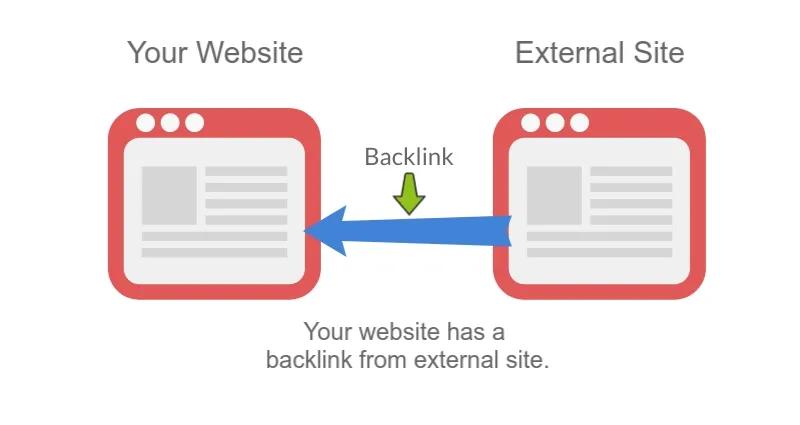
What is meant by a Backlink?
Let me start with the basics. I have heard business owners throw around this word multiple times without having any idea of what it means. So, let us understand what Backlinks are.
A backlink is simply a link on someone else’s website that points to a page on yours. That’s it. If a food blogger writes about the best local restaurants and links to your café’s website, you’ve just earned a backlink. If a national news outlet covers your product launch and drops a link to your homepage, that’s a backlink too.
Backlinks are also called “inbound links” or “incoming links.”
Now, here’s where it gets interesting. When Google’s crawlers roam the internet, they don’t just read the content on your page. They follow the links connecting one site to another. And every time they find a link pointing to your website, they essentially record it as a vote. Think of it this way: whenever a politician wins with a large number of votes, you think this person must be trustworthy because so many people voted for him. A similar thing happens to websites: the more backlinks they get, the more trustworthy they seem, and the higher their ranking is.

Why Backlinks Matter for Your Business
You could have the most beautifully designed website: fast, mobile-friendly, and full of genuinely useful content, but it can still sit on page 5 of Google if nobody’s linking to it.
That’s the quiet power of backlinks. They work in the background, invisible to your visitors, but not to Google.
Rankings!
Google uses over 200 signals to decide how and where websites rank. Your backlink profile is one of the most important of those signals. Some SEO experts estimate that it accounts for roughly 40% of how rankable your site is. This means that the website with a stronger, more credible backlink profile will rank higher in Google Search. It’s not always fair, and it’s not instant. But it’s consistent.
Domain Authority: Your Website’s Trust Score
There’s a concept called Domain Authority (DA), a score from 1 to 100 that reflects how much Google trusts your website. A brand new site starts low. An established industry publication sits high. When a high-DA website links to yours, it passes a share of that trust over. We call this “link equity”.
One backlink from a reputable government site or a well-known industry publication can do more for your rankings than 50 links from obscure, low-quality blogs. Quality beats quantity every time.
Referral Traffic
Don’t make the mistake of thinking backlinks are purely technical and behind-the-scenes. Real users click links. If your business gets mentioned on a popular local directory, a busy industry blog, or a high-traffic news site, some of those readers will click through to your website. That’s qualified traffic — people who are already interested in something related to what you offer. They didn’t stumble on you by accident. They followed a recommendation.
Not All Backlinks Are Created Equal
This is the confusing part. Some businesses believe that all backlinks are good. But that’s not the case.
What Makes a Good Backlink
A strong backlink contains the following characteristics:
- Relevance: It comes from a website that’s related to your business. A link from a fitness blog to your gym equipment store makes sense. A link from a gambling site to that same store will raise some alarms.
- Authority: The linking site has a solid reputation and trust score of its own. These can be established newspapers, industry associations, government bodies, or well-known trade publications.
- Natural placement: The link sits within useful, relevant content. It doesn’t look forced or buried in a list of 200 other links on a page that clearly exists just to distribute links.
- Good anchor text: The clickable words used for the link should be contextually appropriate. “Click here” is weak. “Best budget running shoes” linking to your product page is much better.
A practical example: imagine a university’s housing advice page linking to a local property management company’s website. That’s a natural, relevant, high-authority backlink. The university isn’t in the business of selling property management, but they’re genuinely pointing students toward a useful resource. Google respects that.
What Makes a Bad Backlink
Bad backlinks are very real, and they can hurt your business.
- Links from spammy, low-quality websites with no genuine audience
- Links from sites in completely unrelated industries
- Paid link schemes
- Links that appear on pages with hundreds of other outbound links, which dilute any value they offer
If you’ve ever received an email from a stranger offering to “boost your SEO” by placing links on their network of sites, please delete it. That’s almost certainly a link scheme, and if Google catches it, your rankings will suffer.
Dofollow vs. Nofollow
You’ll come across these terms when you start working on backlinks, so let us understand them clearly.
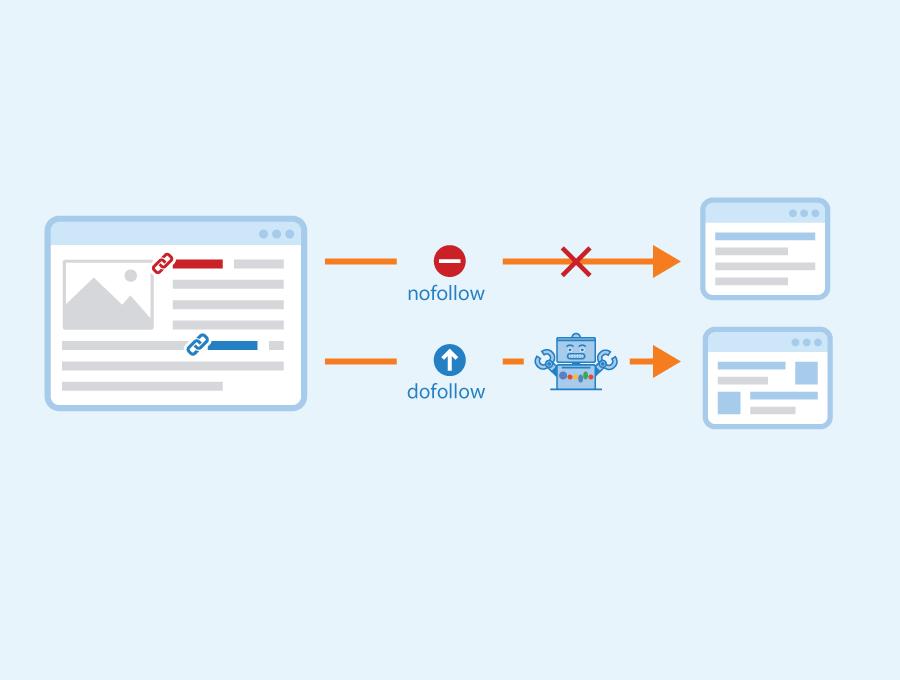
A dofollow link passes authority from the linking site to yours. It is good. It is the kind of backlink that directly contributes to your domain authority and rankings.
A nofollow link includes a small piece of code that tells Google, “don’t pass authority through this link.” These are common in blog comments, sponsored content, and social media. They don’t directly improve your rankings, but they can still send real traffic your way.
Anchor text matters too. The words used as the clickable link text give Google context about what your linked page is about. But don’t go overboard trying to stuff your target keywords into every backlink you earn. Over-optimised anchor text is not a good sign and can often act as a red flag.
How to Actually Build Backlinks for Your Business
Building a robust backlink system for your business is a tough process. Most people skip this part. But it is the boring work that yields more returns.
Building a backlink profile takes time. But you have to be consistent. There are practical strategies that work and some of them are way easier than you’d think.
Create Content That Earns Links Naturally
The most durable backlink strategy is also the most straightforward: publish content that’s genuinely useful, original, and worth referencing. Original research, detailed how-to guides, industry statistics, well-designed infographics, these attract links over time because other writers and website owners find them valuable enough to cite.
It takes longer than outreach. But the links you earn this way tend to be high-quality and relevant. They will always stick.
Write Guest Posts
Guest blogging means writing an article for someone else’s website in exchange for a backlink to yours. Done right, it’s a win-win. They get quality content, you get exposure and a link.
The tricky part here is to choose the correct website. Target websites that are:
- Relevant to your niche
- Actually read by real people
- Not obviously part of a link farm
A guest post on a respected industry publication is worth ten times more than one on low-traffic blogs that exist purely for link exchange.
Build Local Links
If you run a local or regional business, local link building is probably your most profitable choice. Here are a few ways to go about it:
- Sponsor a local sports team, charity event, or community initiative. Most of these organisations have websites and will happily link to their sponsors
- Get listed in reputable local business directories
- Partner with complementary local businesses for cross-promotion
These links do double duty. They help your SEO and build your real-world reputation within the communities you serve.
Turn Unlinked Mentions into Backlinks
This one’s underrated. Set up a Google Alert for your business name. When someone writes about you or references your brand without linking to your site, reach out and politely ask them to add the link. You’ve already earned the mention, getting the link is usually just a matter of asking nicely.
Write Testimonials
Got a software tool or service provider you genuinely like? Write them a testimonial. Many companies feature customer testimonials on their websites with a link back to the reviewer’s site. Easy, authentic, and mutually beneficial.
A Note on Backlink Requests You Receive
Here’s something practical that doesn’t get talked about enough.
If a business emails you asking you to host a link to their content on your website, think carefully before saying yes. Ask yourself: would I link to this content naturally, without being asked? If the answer is no, decline. Hosting low-quality outbound links on your site reflects on you — Google takes into account not just who links to you, but who you link to. We all know that ninety-nine percent of cold backlink request emails deserve to go straight to the bin.
A Tip to Make It All Work
Here’s something worth remembering, especially for those of you who are building your online presence from scratch.
Backlinks drive traffic and authority to your website. But if your website loads slowly, goes down regularly, or lacks an SSL certificate, you’re essentially sending people through a broken front door. All that link-building effort: wasted.
A reliable web host with fast load times, guaranteed uptime, and HTTPS security isn’t just nice. It’s the foundation that makes your SEO investment actually pay off. Think of your hosting as the soil. Backlinks are the water. Without good soil, no amount of watering is going to grow anything worth keeping.
Want to make sure your hosting is set up to support your SEO from day one? Explore our hosting plans →
Conclusion
Backlinks aren’t glamorous. You can’t see them when you visit a website. Your customers don’t know they exist. But search engines do. And over time, a strong backlink profile is one of the most reliable signals of a trustworthy, credible business online.
The quiet power of backlinks is exactly that: quiet. It compounds slowly, steadily, and almost invisibly. But the businesses that commit to it such as creating useful content, building genuine relationships, earning citations from respected sources, are the ones that show up when customers are actually looking.
Start small. Be consistent. And make sure the website those links are pointing to is built on a solid foundation.
Frequently Asked Questions
Q. What are backlinks in SEO?
A. A backlink is a link from another website pointing to yours. Search engines treat them as votes of trust — the more quality backlinks you have, the more credible your site appears.
Q. Why are backlinks important for business?
A. They directly influence where you rank on Google. Better rankings mean more visibility, more traffic, and more customers finding you without paid ads.
Q. Do I need lots of backlinks to rank?
A. No. Quality beats quantity every time. Ten links from authoritative, relevant sites will outperform hundreds from low-quality ones.
Q. Can bad backlinks hurt my SEO?
A. Yes. Links from spammy or irrelevant sites can damage your rankings. You can identify and disavow them using Google Search Console or Ahrefs.
Q. How do I start link building?
A. Begin by publishing useful content worth referencing, get listed in local directories, and reach out to industry blogs about guest posting. It’s a slow burn — but it compounds.
Q. How long before backlinks affect my rankings?
A. Anywhere from a few weeks to a few months, depending on the authority of the linking site and how often Google crawls it.
Leave a Reply