



Introduction to AI Advantages
Imagine having a team member who never takes a lunch break, never calls in sick, processes thousands of data points in seconds, and gets smarter the more you use them. Welcome to the world of AI. And these types of AI advantages can help boost your business ROI.
According to the World Economic Forum, AI could contribute up to $15.7 trillion to the global economy by 2030. Yet many business owners still think of AI as something reserved for Silicon Valley giants with massive budgets. But the truth is that AI is more accessible, more affordable, and more impactful than ever before, for businesses of every size, in every industry.
Whether you’re a solo entrepreneur or running a team of hundreds, AI is no longer a “nice to have.” It’s quickly becoming the single biggest instrument for cutting costs, increasing revenue, and scaling smarter. In this article, we’ll break down exactly what AI advantages are, show you where they already show up in daily life, and walk through 12 undeniable AI advantages that are helping businesses just like yours boost their ROI.
Table of Contents
Let’s Define AI
Artificial intelligence, or AI, is software that can learn from data, identify patterns, and make decisions, often with little to no human input.
Think of it this way: traditional software does exactly what you tell it to, every time, without variation. AI, on the other hand, observes, adapts, and improves. The more information it receives, the better it gets at its job.
Types of AI worth knowing:
- Machine Learning (ML): AI that learns from historical data to make predictions. Think fraud detection or product recommendations.
- Natural Language Processing (NLP): AI that understands and generates human language. This powers chatbots, voice assistants, and tools like ChatGPT.
- Computer Vision: AI that interprets images and video. Used in everything from medical imaging to retail theft prevention.
- Generative AI: AI that creates new content such as text, images, code, and audio, based on prompts. This is the category exploding in business use right now.
You don’t need to understand how it works under the hood. What matters is what it can do for your business.
Examples of AI Advantages
AI isn’t a concept lying in the future. You’re already using it daily, probably without noticing.
- Netflix recommends your next binge based on your watch history.
- Gmail filters spam out of your inbox before you ever see it.
- Google Maps reroutes you around traffic in real time.
- Spotify builds a playlist that somehow knows exactly what you’re in the mood for.
- Amazon predicts what you’ll want to buy before you’ve even searched for it.
- Your bank flags unusual transactions on your card within seconds of them happening.
These aren’t magic but AI advantages at work. And the same technology powering these consumer experiences is what businesses are now using to cut costs, serve customers better, and make sharper decisions. The only difference is that now it’s available to you too.
12 Undeniable AI Advantages for Businesses
These 12 AI advantages are not something to be taken carelessly. These can significantly impact the direction in which your business goes. So, understand them carefully.
1. Cost Reduction and Operational Efficiency
One of the most immediate and measurable benefits of AI is how quickly it reduces operating costs. By automating time-consuming manual processes such as data entry, report generation, invoice processing, and scheduling, businesses free up human hours for work that actually matters.
A McKinsey study found that AI advantages, such as automation, can reduce business process costs by up to 30%. For a mid-sized business, that’s not a small number. It’s the difference between a lean operation and a bloated one.
2. 24/7 Customer Support via AI Chatbots

Your customers don’t only have questions between 9 and 5. AI-powered chatbots handle inquiries around the clock, such as answering FAQs, processing returns, tracking orders, and even resolving complaints — with a targeted human-in-the-loop system whenever required.
This doesn’t just save money on support staff. It actively improves customer satisfaction. Faster responses, no hold times, consistent answers. Companies using AI advantages, such as chatbots, report rising customer satisfaction scores and falling support costs. That’s a win-win for everybody.
3. Smarter, Faster Decision-Making
Business decisions used to rely on gut instinct, slow reports, and incomplete data. AI changes that entirely. It can analyze millions of data points: sales trends, market conditions, customer behavior, competitor moves, and provide clear, actionable insights in real time.
Leaders who use AI-assisted analytics make better calls, faster. They spot problems before they become crises and identify opportunities before competitors do. In today’s market, that speed is a genuine competitive edge.
4. Hyper-Personalized Customer Experiences
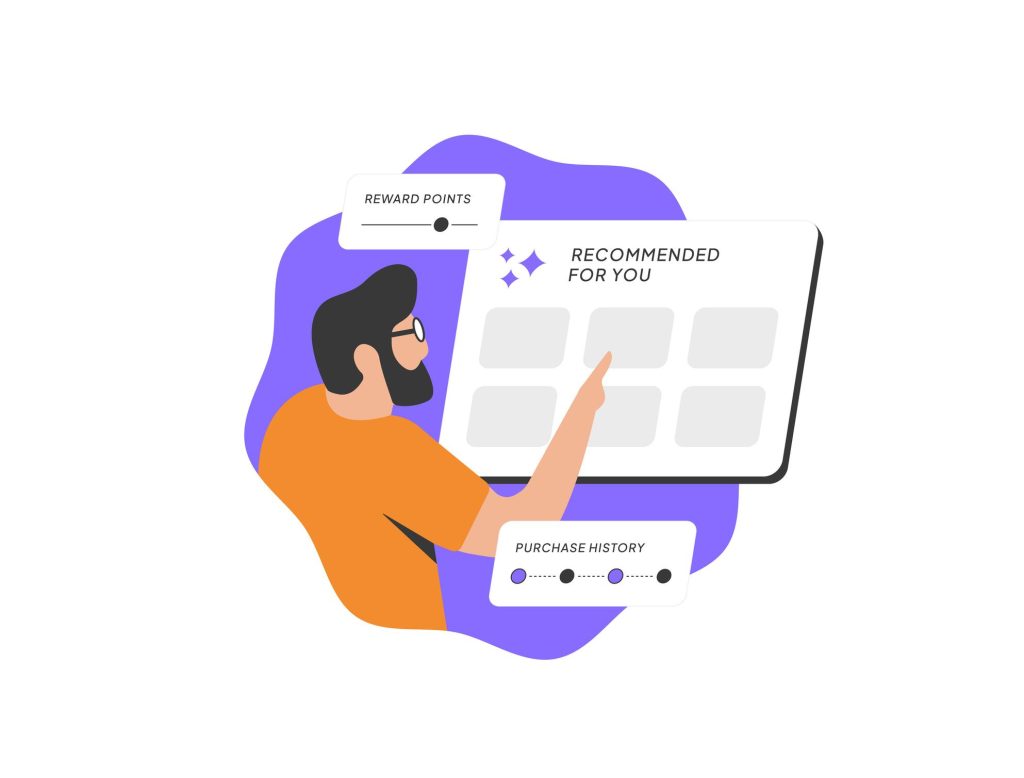
Customers no longer respond to generic marketing. They expect experiences tailored to them, their preferences, their history, and their behavior. AI advantages make this possible at scale.
Retailers use AI to show each customer products they’re actually likely to buy. Email marketers use it to send the right message at the right time. SaaS companies use it to suggest features based on how individual users engage with their product. The result? Higher conversion rates, longer customer lifetimes, and stronger brand loyalty.
5. Automating Repetitive Tasks
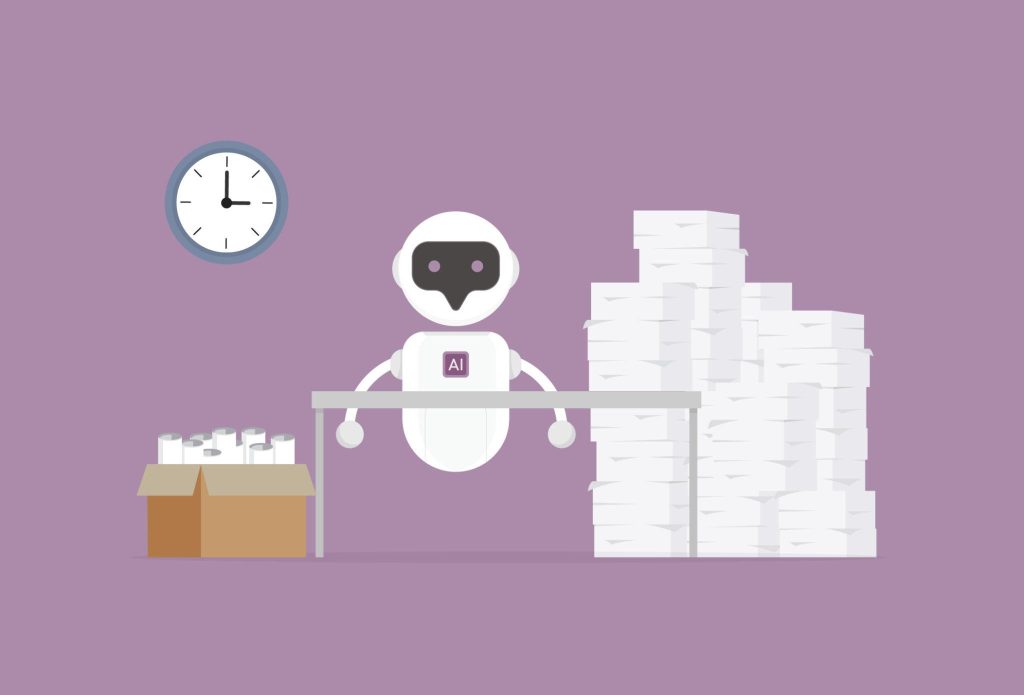
Every business has tasks that are necessary but mindless, and that includes data entry, scheduling meetings, generating weekly reports, sorting emails, and updating spreadsheets. These tasks eat up hours and drain your team’s energy.
AI tools like workflow automation platforms can handle these tasks end-to-end, without supervision. Your team stops doing robot work and starts doing human work: strategy, relationships, problem-solving. Productivity goes up, and so does your business ROI.
6. Better Sales Forecasting and Revenue Prediction
AI advantages can help you analyze your historical sales data, seasonal trends, market signals, and customer behavior to produce revenue forecasts that are more accurate than traditional spreadsheet models.
For a business owner, this changes everything. You can plan inventory, hiring, and marketing spend with real confidence instead of hoping your gut estimate was close enough. More accurate forecasting means fewer costly surprises and smarter resource allocation across the board.
7. Enhanced Cybersecurity
Cyber threats are evolving faster than any human security team can keep up with. AI-powered security systems monitor your networks continuously, detect anomalies the moment they appear, and respond to threats in real time, often before a human analyst would even notice something was wrong.
For small and medium businesses, especially, this is critical. Cybercriminals often target smaller businesses precisely because their defenses are weaker. AI levels the playing field, giving businesses enterprise-grade protection without enterprise-grade costs.
8. Accelerated Content and Marketing Production
Marketing teams are under constant pressure to produce more content, on more platforms, for more audiences. AI tools can draft blog posts, generate social media captions, write ad copy, design visuals, and even produce video scripts in a fraction of the time it would take a human to do it from scratch.
This doesn’t mean replacing your marketing team. It means amplifying what they can output. A team of three, equipped with the right AI tools, can now produce what used to require a team of ten. That’s a direct improvement in marketing ROI.
9. Streamlined Hiring and HR Processes
Recruiting is expensive and time-consuming. Screening hundreds of resumes, scheduling interviews, sending follow-ups, and onboarding new hires, it is a difficult process. AI tools can scan resumes for the right qualifications in seconds, rank candidates, automate scheduling, and handle routine HR queries from employees.
The result is a faster hiring process, reduced recruiter workload, and a better candidate experience. Businesses also report reduced bias in early-stage screening when AI is used to evaluate candidates based on skills rather than subjective impressions.
10. Improved Supply Chain and Inventory Management
Running out of stock costs sales. Overstocking costs cash. AI helps businesses find the exact right balance by predicting demand based on historical data, seasonal trends, and external signals like economic conditions or weather patterns.
Retailers, manufacturers, and logistics companies using AI-driven inventory management report significant reductions in both stockouts and excess inventory. The supply chain becomes leaner, faster, and more responsive, directly improving margins.
11. Data Analysis at Superhuman Speed

The average business generates more data than any team could analyze manually — website behavior, sales figures, customer feedback, social media signals, market trends. Most of that data goes unused simply because there aren’t enough hours in the day to make sense of it.
AI processes all of it, instantly. It identifies trends, flags outliers, correlates variables, and delivers clear summaries that humans can actually act on. Businesses that harness this capability stop flying blind and start making evidence-based decisions across every department.
12. Scalability Without Proportional Cost
Traditionally, scaling a business meant hiring more people, opening more offices, and spending more money. AI breaks that relationship. AI systems handle increased workload — more customers, more transactions, more data — without a corresponding increase in cost.
A chatbot that handles 100 customer queries a day can handle 10,000 with the same infrastructure. An AI analytics tool doesn’t need overtime pay when your data doubles. This scalability is one of the most powerful long-term advantages AI offers, especially for growing businesses that want to expand without letting costs spiral.
Conclusion
AI isn’t coming for businesses; it’s already here. And the businesses embracing it now aren’t just saving money. They’re building advantages that will be very hard for slower-moving competitors to close.
The 12 AI advantages above aren’t theoretical. They’re happening across industries, company sizes, and business models right now. From cutting operational costs to delivering personalized customer experiences to making smarter decisions faster — AI advantages are proving, repeatedly, that they deliver real, measurable ROI.
The good news is that you don’t need to implement everything at once. Start with one area — customer support, marketing, data analysis — and build from there. The learning curve is gentler than most people expect, and the returns can show up faster than you’d imagine.
The question is no longer whether AI will reshape your industry. It is already doing that. The only question worth asking now is: will you be ahead of that curve, or catching up to it?
Frequently Asked Questions
Q. What are the AI advantages for small businesses?
A. For most small businesses, the biggest win is automation. AI advantages help you handle repetitive, time-consuming tasks such as customer queries, scheduling, and data entry, so that small teams can focus on growth instead of admin. It’s like adding headcount without the payroll.
Q. Are AI advantages difficult to implement?
A. Not necessarily. Many AI tools are available on affordable monthly subscriptions — some even have free tiers. Tools like ChatGPT, Zapier, and HubSpot’s AI features are accessible to businesses with modest budgets. The cost of not adopting AI is increasingly higher than the cost of starting.
Q. Can AI replace human employees?
A. AI is better understood as a tool that augments human work rather than replaces it entirely. It takes over repetitive, rule-based tasks, freeing humans to focus on strategy, relationships, and creative problem-solving — work that AI can’t replicate. Most businesses that adopt AI see it expand what their teams can do, not shrink their headcount.
Q. How quickly can a business see ROI by adopting AI advantages?
A. It depends on the tool and use case, but many businesses report seeing measurable returns within 3 to 6 months of implementation. Customer support automation and marketing tools tend to show results fastest. More complex implementations like supply chain AI may take longer but deliver larger long-term gains.
Q. Which AI tools are best for beginners?
A. Great starting points include ChatGPT or Claude for content and research tasks, Zapier or Make for workflow automation, HubSpot for AI-assisted marketing and CRM, and Grammarly for writing. These tools are designed for non-technical users and deliver value quickly with minimal setup.
Leave a Reply