


Digital marketing for startups in 2026 refers to using online channels, tools, and data-driven strategies to promote a new business, attract customers, and scale growth efficiently. It includes a mix of SEO, content marketing, social media, paid advertising, email campaigns, and website optimization as all are working together to build visibility and generate leads in a highly competitive digital landscape.
Digital marketing for startups focuses on measurable results, precise audience targeting, and cost-effective execution. Startups can reach their ideal customers faster through platforms like search engines, social media, and mobile apps without needing massive budgets.
As of 2026, the digital marketing for startups concept has evolve just beyond online promotion where it is emphasizes personalization, automation and AI insights just to develop their performance and decision making. Where in the place of startup marketing investment is crucial, the founders of the new startups are not only spent their money on Ads, but they strategically invest in SEO, Contents in social media and customer services.
Table of Contents
Why Digital Marketing for Startups Drives Growth in 2026?

Digital marketing for startups has become a core driver of growth in 2026 because it allows new businesses to reach the right audience quickly and efficiently. Unlike traditional marketing, digital channels such as search engines, social media, and email enable startups to connect with potential customers where they already spend their time. With limited budgets, startups can use targeted campaigns to maximize visibility without overspending, making digital marketing a practical and scalable solution from day one.
One of the biggest advantages of digital marketing for startups is its ability to deliver measurable results. Startups can track performance through analytics tools, monitor user behavior, and adjust strategies in real time. This data-driven approach helps founders understand what works and what doesn’t, allowing them to optimize campaigns for better outcomes. As a result, startups can generate more leads, improve conversion rates, and accelerate their growth with informed decision-making.
Another key factor is cost-effectiveness. Digital marketing offers flexible options, from organic strategies like SEO and content marketing to paid campaigns such as social media ads and search engine marketing. Startups can begin with a small investment and gradually scale their efforts as they grow. This makes digital marketing an ideal choice for startups looking to achieve high returns without large upfront costs.
In 2026, building a strong online presence is essential for credibility and brand recognition. Customers often research businesses online before making a decision, and startups that invest in digital marketing can establish trust through consistent content, reviews, and engagement. Social media platforms, blogs, and websites help startups showcase their expertise, connect with their audience, and build long-term relationships.
Finally, digital marketing empowers startups to compete with larger, established brands. By leveraging strategies like search engine optimization, personalized content, and targeted advertising, startups can reach niche audiences and stand out in crowded markets. This level playing field allows even small businesses to grow rapidly and expand their reach globally. In today’s competitive landscape, digital marketing is not just an option, it is a key growth engine for startups in 2026.
Why is Digital Marketing a Smart Investment for Startups?
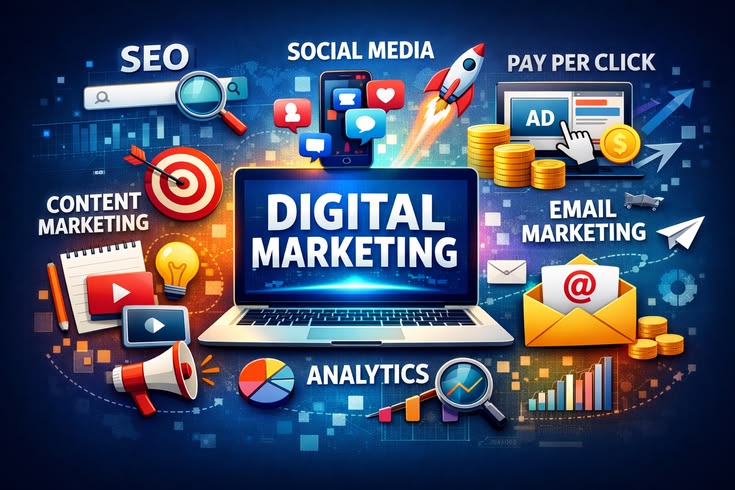
A well-planned startup marketing investment in digital marketing for startups is one of the smartest decisions founders can make in 2026. Unlike traditional marketing, which often requires large upfront costs and offers limited tracking, digital marketing provides measurable, scalable, and targeted growth opportunities.
Startups can reach their ideal audience through search engines, social media, and online platforms without wasting resources on broad, untargeted campaigns. This makes digital marketing for startups not just a promotional tool, but a strategic investment that drives consistent business growth.
One of the biggest advantages of digital marketing for startups is its ability to deliver a higher return on investment (ROI) compared to traditional marketing methods. With tools like analytics dashboards and performance tracking, startups can monitor every campaign in real time and adjust strategies based on actual data.
This ensures that every rupee spent contributes to measurable results such as website traffic, leads, or sales. A smart startup marketing investment in digital channels like SEO, content marketing, and targeted ads allows startups to focus only on what works, eliminating unnecessary expenses and maximizing returns.
For startups operating with limited funds, digital marketing for startups offers unmatched flexibility and affordability. Businesses can start small with organic strategies like SEO and content creation, then gradually invest in paid campaigns as they grow. Unlike traditional advertising, where costs are fixed and often high, digital marketing allows startups to control budgets, target specific audiences, and scale campaigns as needed.
This makes every startup marketing investment more efficient, helping startups achieve meaningful results without overspending. In 2026, this cost-effective approach is a major reason why digital marketing continues to be the preferred growth strategy for startups.
How Can Startups Measure Success and ROI from Digital Marketing?

Startups can measure success and return on investment (ROI) from digital marketing by setting clear goals and tracking performance against those objectives. Whether the aim is to increase website traffic, generate leads, or boost sales, having defined key performance indicators (KPIs) helps evaluate what’s working and what needs improvement.
By comparing the cost of campaigns with the results they generate, startups can understand the true value of their marketing efforts and make smarter decisions to optimize future strategies.
To accurately measure performance, startups should focus on metrics that directly reflect growth and engagement. These include website traffic, conversion rates, cost per acquisition (CPA), return on ad spend (ROAS), click-through rates (CTR), and customer lifetime value (CLV). Tracking these metrics provides insights into how users interact with campaigns, which channels are most effective, and where improvements can be made.
Analytics plays a crucial role in improving marketing performance by providing actionable insights into user behavior and campaign effectiveness. By analyzing data from tools like website analytics, ad platforms, and customer tracking systems, startups can identify trends, understand audience preferences, and refine their strategies.
This enables continuous optimization helping in adjusting targeting, content, and budget allocation to maximize results. With a data-driven approach, startups can reduce wasted spending, improve efficiency, and achieve better overall performance from their digital marketing efforts.
What Are the Biggest Digital Marketing Trends for Startups in 2026?
In 2026, digital marketing for startups is evolving rapidly, driven by technology, changing consumer behavior, and increasing competition. Startups are no longer relying only on basic online promotion as they are adopting smarter, data-driven strategies to stand out in crowded markets.
A well-planned startup marketing investment now focuses on automation, personalization, and performance tracking to achieve faster and more sustainable growth. Trends like AI-powered tools, voice search optimization, short-form video content, and omnichannel marketing are shaping how startups attract and retain customers.
Artificial Intelligence is transforming digital marketing for startups by making campaigns more efficient, targeted, and scalable. AI tools can analyze large amounts of data, predict customer behavior, and automate tasks such as content creation, ad optimization, and customer support. This allows startups to save time and resources while improving campaign performance.
A strategic startup marketing investment in AI-driven platforms helps startups deliver the right message to the right audience at the right time, increasing engagement and conversion rates. In 2026, AI is no longer optional as it is a key driver of competitive advantage in digital marketing.
Personalization has become a critical factor in the success of digital marketing for startups. Modern consumers expect tailored experiences, relevant content, and personalized recommendations based on their interests and behavior. Startups that invest in personalization can build stronger relationships with their audience, improve customer satisfaction, and increase loyalty. By making a smart startup marketing investment in tools that enable personalized emails, targeted ads, and customized website experiences, startups can significantly boost engagement and conversions.
How Can Startups Use Digital Marketing Strategies Effectively in 2026?
Startups can use digital marketing strategies effectively in 2026 by focusing on an integrated and data-driven approach that connects multiple channels into one cohesive system. Instead of relying on a single method, successful startups align their website, content, social media, and advertising efforts to deliver consistent messaging and value to their target audience. By analyzing user behavior and campaign performance, they can continuously optimize their strategies, ensuring better engagement, higher conversions, and sustainable growth over time.
SEO, content, and social media work together by creating a cycle of visibility, engagement, and traffic. SEO ensures that content is discoverable on search engines, while high-quality content provides value that attracts and retains users. Social media platforms then act as distribution channels, helping amplify that content to a wider audience and driving traffic back to the website. When these elements are aligned, startups can build authority, increase brand awareness, and generate consistent organic growth.
Combining organic and paid marketing allows startups to balance short-term results with long-term growth. Organic methods like search optimization and content creation help build trust and visibility over time, while paid campaigns can deliver immediate traffic and targeted leads. By using both approaches together, startups can test different strategies, identify what performs best, and scale their efforts more efficiently. This combination ensures faster growth while maintaining a strong and sustainable marketing foundation.
Final Thoughts
In 2026, digital marketing for startups has become more than just a promotional tool, it is also a critical driver of growth, visibility, and long-term success. Startups that embrace digital channels can reach targeted audiences, build strong brand credibility, and compete effectively in an increasingly competitive market. With the ability to track performance and optimize strategies in real time, digital marketing empowers startups to make smarter decisions and achieve faster results.
A well-planned startup marketing investment in digital marketing ensures that every effort contributes to measurable outcomes, whether it’s generating leads, increasing conversions, or building customer loyalty. By combining strategies like SEO, content marketing, social media, and paid advertising, startups can create a balanced approach that delivers both short-term gains and sustainable growth.
FAQs
What is digital marketing for startups?
Digital marketing for startups is the use of online channels like SEO, social media, and ads to attract customers and grow a business.
Why is digital marketing important for startups in 2026?
It helps startups reach targeted audiences, build brand awareness, and grow faster with lower costs.
How much should startups invest in digital marketing?
Startups typically invest 5–15% of their revenue, depending on growth goals and competition.
Which digital marketing strategy is best for startups?
A mix of SEO, content marketing, social media, and paid ads works best for balanced growth.
How can startups measure digital marketing success?
By tracking metrics like website traffic, conversions, ROI, and customer acquisition cost.
Can startups grow without digital marketing?
It is possible, but very difficult in 2026 due to strong online competition.
Leave a Reply