
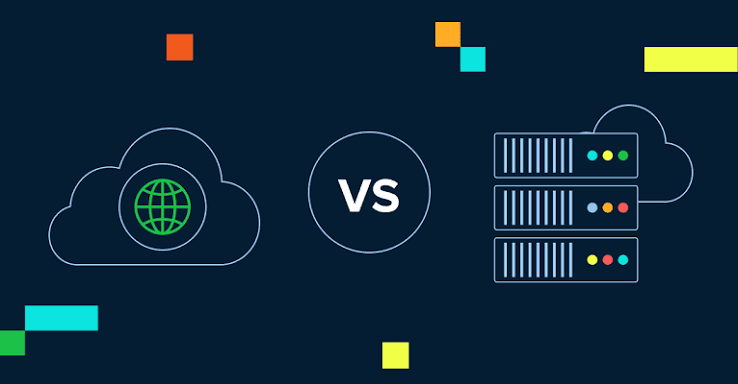


Starting a website can feel confusing when you come across terms like domain name, web hosting, server, DNS, and website files. Two of the most important terms beginners need to understand are domain and hosting. Although a domain name and web hosting work together to make a website accessible online, they have completely different purposes.
The hosting server then delivers the website’s files, such as HTML, CSS, JavaScript, images, and other content.Understanding the difference between domain and hosting can help you choose the right services, manage your website more effectively, and avoid common mistakes.
In this guide, we will explain seven key differences between domain and hosting in simple terms.
Table of Contents
What is a Domain Name?
It is the unique address people use to access your website on the internet.
For example:
- google.com
- amazon.com
- wikipedia.org
A domain normally consists of two main parts:
- Name: example
- Extension: .com
Together, they form:
example.com
Popular extensions include .com, .org, .net, .in, and many others.
What is Web Hosting?
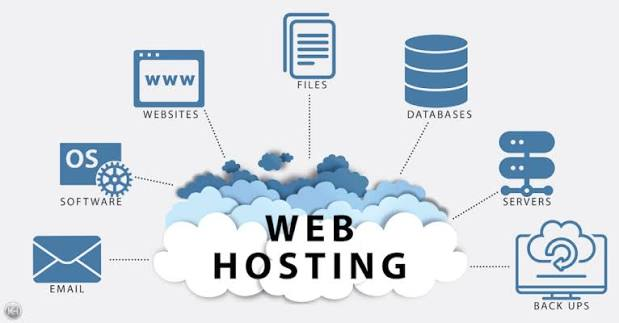
A website contains different types of files and data, including:
- HTML files
- CSS files
- JavaScript files
- Images
- Videos
- Databases
- Documents
- Application files
The file is stored in server on internet. When someone visit your website they will see it.
Common types of hosting include:
- Shared hosting
- VPS hosting
- Dedicated hosting
- Cloud hosting
- Managed WordPress hosting
Each type provides different levels of performance, resources, control, and scalability.
7 Key Differences
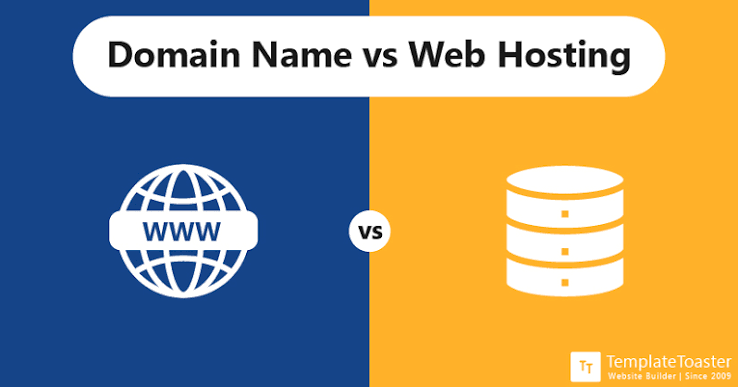
Although they both work together, they differ in several important ways.
1. Purpose
The biggest difference is their purpose. Think of a physical house. The house has an address that helps people find it. The house itself contains your belongings.
In this example:
Domain = Address
Hosting = House
For example, suppose you create a website called mybusiness.com. Your hosting server stores the website files and delivers them when someone visits it.
2. What You Get
When you purchase it, you mainly obtain the right to use a particular name for the registration period. Depending on the registrar and service package, you may also receive features such as:
- DNS management
- Domain forwarding
- Privacy-related features
- Email-related options
- Domain management tools
Hosting provides server resources instead.
you may receive:
- Storage space
- Bandwidth
- Server resources
- Database support
- Email accounts
- Website management tools
- Security features
- Backup options
3. How They Are Managed
That are managed through different systems, although some companies provide both services under one account.
- Renewing the domain
- Updating contact information
- Managing DNS records
- Changing nameservers
- Setting up domain forwarding
You may manage:
- Depending on your hosting service, you may manage:
- Website files
- Databases
- Applications
- Server settings
- Backups
- SSL certificates
- Email accounts
For advanced hosting environments, administrators may use tools such as SSH and command-line interfaces.
4. Cost and Renewal

They have separate costs, although some providers offer packages that combine both. It is generally registered for a specific period, commonly one year, and needs to be renewed before expiration. Hosting is usually purchased according to a subscription period. Depending on the provider, you may be able to pay monthly, annually, or for another billing period. The price can vary significantly.
The pricing depends on factors such as:
- Domain extension
- Registrar
- Registration period
- Premium status
- Renewal pricing
Hosting pricing depends on factors such as:
- Hosting type
- Storage
- Bandwidth
- CPU and memory resources
- Number of websites
- Additional services
One important point for beginners is to check the renewal price, rather than looking only at the introductory price.
5. Technical Function
Both also perform different technical functions.
For example:
Visitor enters: example.com
DNS helps locate: The appropriate server
Hosting server: Sends website content
Browser: Displays the website
This process happens quickly, so visitors usually do not notice the technical steps happening behind the scenes. Hosting, on the other hand, is responsible for storing and serving the website’s resources. For example, when a visitor requests a webpage, the hosting server may retrieve an HTML file, database information, images, or other resources and send them to the visitor’s browser.
6. Can You Have One Without the Other?
Yes, they can exist separately. For example, you might register it today and decide to build the website later. A hosting provider may give you a temporary URL or server address that you can use while setting up your website.
This is done using DNS settings.
For example:
Domain: mywebsite.com
Hosting: Your web server
DNS: Connects it to the appropriate hosting server
This allows visitors to enter and reach the website hosted on your server.
7. Changing One Does Not Necessarily Mean Changing the Other
Another important difference is that both can often be changed independently. You can move your website to another hosting provider while keeping the same name. Similarly, you can transfer your domain to another registrar while continuing to use the same hosting provider. However, when making changes, you need to configure DNS settings correctly to prevent website or email interruptions.
Quick Comparison
| Feature | Domain | Hosting |
| Main Purpose | Website address | Stores website files |
| Example | example .com | Web server |
| Main service | Domain registration | Server resources |
| Management | Domain registrar/DNS dashboard | Hosting control panel/server |
| Renewal | Usually periodic | Based on hosting subscription |
| Stores website files? | No | Yes |
| Can be purchased separately? | Yes | Yes |
| Connects to | Hosting/server | Domain through DNS |
How Both Work Together
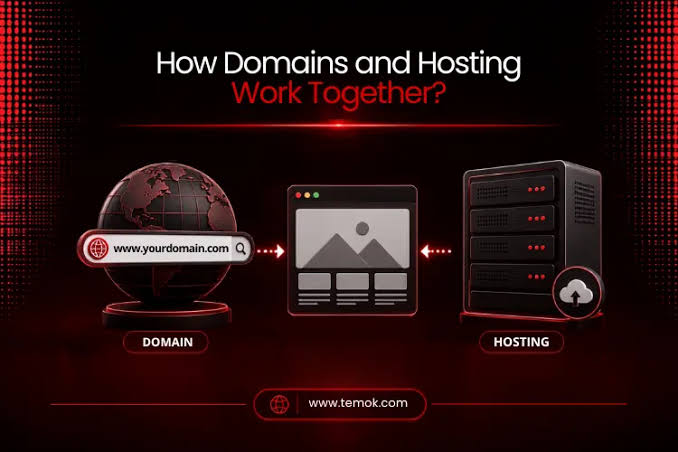
Understanding how both work together makes the concept easier.
First, you register:
mybusiness.com
When a visitor enters:
mybusiness.com
The hosting server then responds by sending the website content to the visitor’s browser.
The browser displays the website.
In simple terms:
Domain → Finds the website
DNS → Connects the domain to the server
Hosting → Stores and delivers the website
Can You Buy Both From Different Companies?
Yes. You do not have to purchase both from the same company. For example, you could register your domain with one provider and purchase hosting from another provider. You would then configure the DNS or nameserver settings to connect it to your hosting service. However, beginners may find it easier to manage both services through one provider because the setup can be simpler. Advanced users may prefer separate providers for flexibility, pricing, features, or management requirements.
Common Mistakes Beginners Should Avoid

- Confusing Domain With Hosting
It is not where your website files are stored. It is the address used to reach your website. - Looking Only at the Introductory Price
Some providers offer discounted first-year prices. Always check the renewal price before purchasing. - Forgetting Domain Renewal
If it expires, your website and related services can be affected. Enable automatic renewal when appropriate and keep your payment information updated. - Changing DNS Without Understanding the Settings
Incorrect DNS changes can make your website or email unavailable. Record existing settings before making significant changes. - Choosing Hosting Without Checking Requirements
Consider your website’s expected traffic, technology stack, storage requirements, performance needs, and scalability before selecting a hosting plan.
Which One Do You Need for a Website?
For a typical website, you generally need both. The domain provides the address that visitors use, while hosting provides the server infrastructure needed to store and deliver your website. However, some website-building platforms bundle hosting with the website service and may provide a domain as part of the package. Your exact requirements depend on the type of website you are creating. For example, a personal blog may have different requirements from an online store, business website, or web application.
Conclusion
Understanding the difference between both is one of the first steps toward learning how websites work. It is the web address that visitors use to find your website. Hosting is the server infrastructure that stores and delivers your website’s files and data. The two services work together through DNS. When configured correctly, visitors can enter your domain name and access the website hosted on your server. Before purchasing a domain or hosting plan, compare pricing, renewal terms, resources, security features, support, scalability, and management options. Understanding these differences will help you make informed decisions when creating and managing your website.
FAQs
- Is a domain the same as hosting?
No. It is the address of a website, while hosting provides server resources for storing and delivering the website’s files. - Can I buy a domain without hosting?
Yes. You can register it and purchase hosting later. The domain can remain registered until you are ready to connect it to a website. - Can I buy hosting without a domain?
Yes. Many hosting services allow you to use a temporary URL or server address while setting up your website. - Do domain and hosting need to come from the same company?
No. You can register your it with one company and purchase hosting from another. You can then connect them using DNS settings. - What is DNS in simple terms?
DNS, or Domain Name System, helps translate its names into information used to locate the appropriate internet service or server. - How long does a domain registration last?
The registration periods depend on its extension and registrar, but one-year registration periods are common. It must be renewed to continue using them. - Can I change my hosting provider without changing my domain?
Yes. You can usually move your website to another hosting provider while keeping the same.You need to update the relevant DNS settings so its points to the new hosting service.
Leave a Reply